Why We Don't Use Templates - And What We Do Instead
Website templates are cheap and fast - but they come with hidden costs. Here's why we build custom sites instead, and what that means for your business.
Quick answer
Templates are everywhere. Wix, Squarespace, WordPress themes - they promise a professional website in minutes. And they do deliver something fast.
Key takeaways
- What a Template Actually Gives You
- Custom Doesn't Have to Mean Expensive
- When a Template Might Actually Be Fine
Templates are everywhere. Wix, Squarespace, WordPress themes - they promise a professional website in minutes. And they do deliver something fast. But fast and effective aren't the same thing.
We made a deliberate decision not to use off-the-shelf templates at Just Sensations. It's one of the most important choices we've made - and it directly affects the results our clients get. Here's why, and what we do instead.
What a Template Actually Gives You
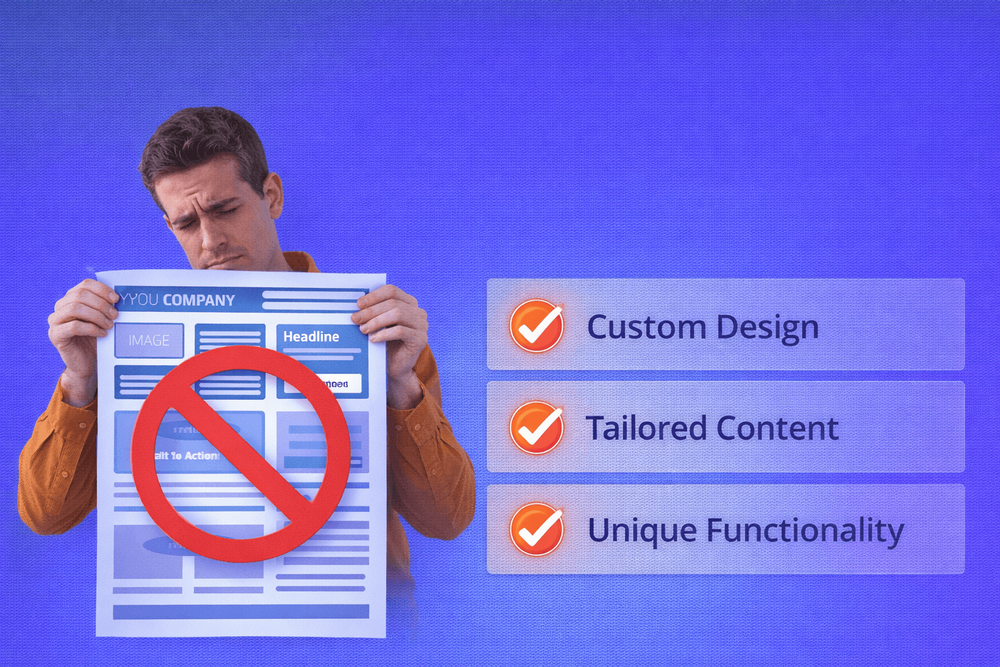
Templates aren't bad products. They solve a real problem - getting something online quickly and cheaply. If you need a personal blog or a placeholder site while you figure things out, a template does the job. But the moment your website needs to actually generate business - attract customers, build trust, convert visitors into enquiries - a template starts working against you. It wasn't designed for your business. It was designed to look acceptable for everyone.
We've reviewed dozens of template websites for clients who came to us wondering why their site wasn't working. The pattern is always the same: the site looks fine on the surface. Nice colours, decent photos, pages that load. But there's no structure behind it. No thought about what a visitor needs to see first, what should come next, or what action they should take. The template gave them a layout. Nobody gave them direction.
The Hidden Costs of a Template Website
Templates look cheap at first. But the real costs show up later - and they add up faster than most people expect.
- The redesign cycle. The biggest hidden cost of a template is the redesign. We've seen it over and over - someone buys a template, gets it live, realises within six months that it's not generating enquiries, and then pays someone to rebuild it from scratch. The template was cheaper upfront. But template plus rebuild costs more than doing it properly the first time. That cycle is one of the main reasons we stopped using templates entirely.
- Plugin bloat. Plugin bloat is something most people don't think about until their site takes five seconds to load. Templates rely on plugins for everything - contact forms, SEO, image galleries, sliders. Each one adds code, adds load time, and adds a potential security vulnerability. We've audited template sites with over thirty active plugins. That's thirty things that can break, slow down, or get hacked.
- Looking like everyone else. Your template is available to thousands of other businesses. Change the colours and swap the logo, and you still have the same layout, the same structure, the same feel as hundreds of other sites. For a small business trying to build trust and stand out locally, that sameness is a real problem. Your website should feel like yours - not like a skin over someone else's design.
- SEO ceiling. Template code often isn't optimised for search engines. Schema markup is generic or missing, the page structure doesn't match your content strategy, and you're locked into whatever the template developer decided was "good enough."
- Limited structure. You're confined to someone else's layout decisions. Want to change how a section works, move a call to action, or restructure the user journey? You might not be able to - or it might require workarounds that add even more bloat.
Why We Build Custom
Every site we build is structured around the client's business, their audience, and their goals. That means the page structure, the messaging, and the user journey are all designed with purpose - not inherited from a generic layout.
Custom doesn't mean we start from a blank screen every time. We've built our own library of components - layouts, sections, elements - that we've tested and refined over time. But unlike an off-the-shelf template, every site we build is assembled and structured around that specific client's business. The building blocks are ours. The blueprint is yours. That's how we keep custom work efficient and accessible without sacrificing quality.
Think of it like a kitchen renovation. A template is a flat-pack kitchen from a catalogue - same layout for everyone, limited options, quick to install but impossible to adapt. Our approach is more like a joiner who has a workshop full of quality materials and proven techniques, but designs and builds each kitchen to fit the specific room. The components are tested. The result is unique.
This is also why our sites are fast. There's no bloat, no unnecessary plugins, no code that exists because a template needed to work for a million different use cases. Every line of code on your site is there because your site needs it. Nothing more, nothing less. That's the performance difference between a custom build and a template dressed up to look custom.
Here's what custom means in practice:
- Structure designed for your business. Pages, sections, and user flow built around what your customers need to see - not what a template decided to include.
- Clean, lean code. Fast load times, no plugin dependencies, no bloat slowing things down.
- SEO built into the foundation. Proper page structure, schema, meta data, and local search setup from day one - not bolted on as an afterthought.
- Full control. Nothing is locked behind a template's limitations. If something needs to change, it changes.
- Messaging that connects. Content guidance is part of the process - we help shape what your site says, not just how it looks.
Custom Doesn't Have to Mean Expensive
The traditional objection to custom websites is cost. And it's a fair one - if you go to a traditional agency, a custom site can easily cost five to ten thousand pounds. But that price reflects the agency's overhead, not the complexity of the work.
Because we use a system-based approach with our own tested components, we deliver custom work at a fraction of the traditional cost. The thinking is the same. The process is just more efficient.
That's the core of our affordable web design positioning. The price is accessible because the process is smart - not because the work is basic.
When a Template Might Actually Be Fine
We're not going to pretend templates are always wrong. If you need a personal blog, a hobby project, or a simple placeholder while you're getting started, a template gets the job done. There's no shame in that.
But if your website is supposed to generate business - attract customers, build trust, convert visitors into enquiries - then a template is a compromise you'll feel the cost of later. Not in the first week. But in the sixth month, when your phone still isn't ringing and you're wondering why.
What to Do Next
Your website is a business tool. It should be built like one - with purpose, structure, and your specific goals in mind. Not assembled from a catalogue of parts designed for someone else.
Want a website built around your business, not a template?
Book a free consultation and we'll show you what a custom, strategically built website could do for you.
FAQ
What will you learn in "Why We Don't Use Templates - And What We Do Instead"?
Templates are everywhere. Wix, Squarespace, WordPress themes - they promise a professional website in minutes. And they do deliver something fast.
Why is What a Template Actually Gives You important?
Because it directly affects trust, message clarity, and conversion before someone contacts you.
What is the best first step?
Apply one practical change this week, measure the result, and repeat with the next highest-impact improvement.

Categories: General