Diseño web para tejadores: qué necesita tu web para conseguir más trabajos
El sector de los tejados es uno de los oficios donde la fama del "chapuzas" golpea más fuerte. Los propietarios han oído las historias — alguien paga por adelantado, el tejador...

Respuesta rapida
El sector de los tejados es uno de los oficios donde la fama del "chapuzas" golpea más fuerte. Los propietarios han oído las historias — alguien paga por adelantado, el tejador desaparece, o el trabajo se deshace seis...
Puntos clave
- Por qué los tejadores necesitan una web que trabaje más duro
- Qué buscan los clientes en la web de un tejador
- Los errores que vemos en webs de tejadores
- Páginas que toda web de tejador necesita
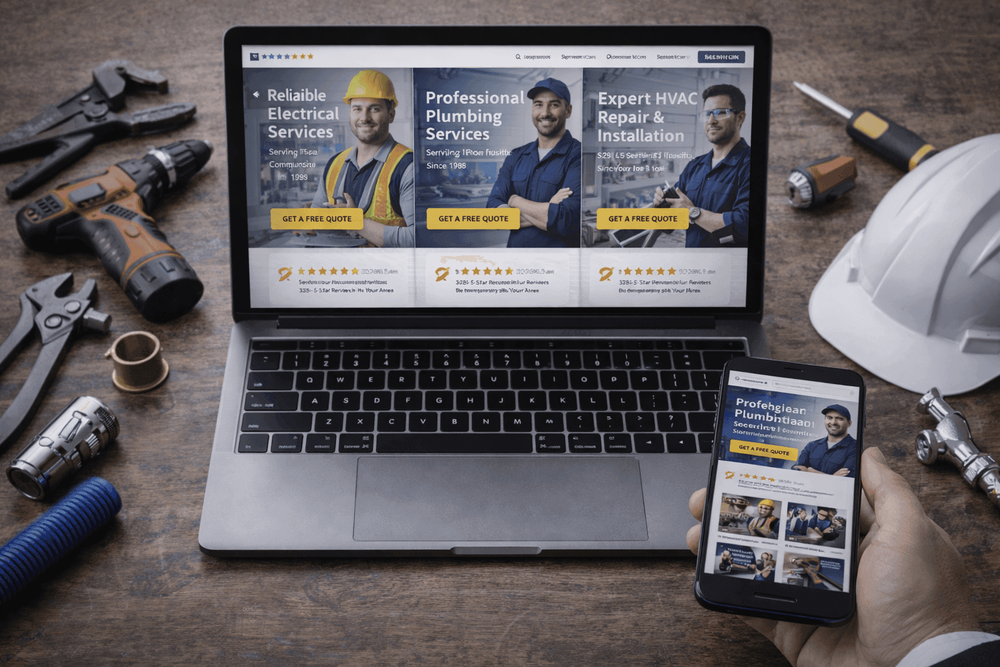
El sector de los tejados es uno de los oficios donde la fama del "chapuzas" golpea más fuerte. Los propietarios han oído las historias — alguien paga por adelantado, el tejador desaparece, o el trabajo se deshace seis meses después. Si eres un tejador legítimo, tu web es el primer sitio donde puedes demostrar que tú no eres uno de esos. Y si tu web parece montada en una tarde, ya empiezas con desventaja.
Hemos hablado con tejadores que pierden trabajos frente a competidores más baratos continuamente — no porque el propietario quisiera un trabajo barato, sino porque no podía distinguir entre un tejador profesional y un chapuzas mirando sus webs. Los dos tenían la misma web de una sola página con una foto de archivo de tejas. El tejador legítimo tenía veinte años de experiencia y estaba dado de alta en el gremio. Pero nada de eso era visible.
Esto es lo que realmente significa un buen diseño web para tejadores — y qué arreglar primero.
Por qué los tejadores necesitan una web que trabaje más duro
Más del 80% de las personas investigan en internet antes de contactar con un profesional. Incluso después de una recomendación, la mayoría de propietarios buscan tu nombre en Google antes de llamar.
Un perfil en Habitissimo o Cronoshare puede parecer suficiente. Pero son plataformas que no controlas. Pueden cambiar sus algoritmos, subir comisiones o poner a un competidor justo al lado. Eso es construir sobre terreno alquilado — y es arriesgado.
Tu web es lo único online que es completamente tuyo. Y para los tejadores en concreto, tiene que hacer algo extra: superar la barrera de confianza que viene con la reputación del sector. Una web profesional y bien estructurada lo consigue antes de que hayas hablado con el cliente.
Qué buscan los clientes en la web de un tejador
Cada visitante de tu web se hace las mismas cinco preguntas. Respóndelas rápido y te llevas la consulta. Falla y el trabajo se lo lleva otro.
- "¿Qué trabajos de tejado hace?" Sé concreto — tejados inclinados, tejados planos, impermeabilización, reparaciones de tejado, canalones, aleros y remates, trabajos de plomo, chimeneas. No hagas que la gente adivine si cubres lo que necesitan.
- "¿Es de fiar?" Aquí es donde los tejadores tienen ventaja si la aprovechan. Alta en el gremio de la construcción, seguro de responsabilidad civil, garantías por escrito, años de experiencia demostrable — estas son las señales que te separan de los chapuzas. Muéstralas de forma destacada.
- "¿Puedo ver su trabajo?" Las fotos de antes y después de tejados terminados son muy potentes. Las fotos con dron o desde el andamio mostrando la escala y la calidad del trabajo pueden hacer que un visitante deje de hacer scroll y empiece a llamar.
- "¿Cubre mi zona?" Deja claro dónde trabajas. Ayuda a los clientes y mejora tu posicionamiento en búsquedas locales.
- "¿Cómo pido presupuesto?" Número de teléfono visible en cada página. Un formulario sencillo de contacto o solicitud de presupuesto. No hagas que la gente lo busque.
Los errores que vemos en webs de tejadores
La mayoría de webs de tejadores no están rotas de forma obvia. Simplemente pierden consultas en silencio a través de pequeños problemas que se acumulan.
- Sin acreditaciones visibles. Si estás dado de alta en el gremio o tienes un seguro de responsabilidad civil, tiene que estar en tu página de inicio — no enterrado en un pie de página que nadie lee.
- Fotos de archivo en vez de trabajo real. Una web de tejador sin fotos de tejados reales es como un restaurante sin carta. Hemos visto webs con fotos de archivo de tejas, obreros genéricos, incluso fotos aéreas de casas al azar. Nada de eso le dice a un propietario si realmente puedes hacer el trabajo. Una foto de un tejado que acabas de terminar hace más que cualquier imagen de archivo.
- Una sola página de "Servicios" vaga. Una sola página que lista todo, desde reparaciones hasta trabajos de chimenea, en un párrafo. Cada servicio necesita su propia página — no porque quede más elegante, sino porque así busca la gente. "Impermeabilización de tejado [ciudad]" necesita aterrizar en una página sobre impermeabilización.
- Sin mención de garantías. Si ofreces garantía de diez años o una garantía respaldada por seguro, dilo claramente. Es un factor de decisión importante para propietarios que van a gastar miles de euros en un tejado nuevo.
- Lenta en el móvil. Las búsquedas por daños de temporal se hacen desde el teléfono. Si tu web tarda cinco segundos en cargar, estás perdiendo esas consultas urgentes frente a quien aparezca primero con un número pulsable y una web rápida.
Páginas que toda web de tejador necesita
No necesitas decenas de páginas. Pero sí necesitas las correctas, bien estructuradas.
- Página de inicio. Tu sección Hero debería decir qué haces, dónde lo haces y cómo contactar — todo visible sin hacer scroll. Algo como "Tejador profesional en [zona] — reparaciones, retejados, tejados planos e impermeabilización" gana a un eslogan vago cada vez.
- Páginas de servicios individuales. Una página por cada servicio principal: reparaciones de tejado, tejados planos, impermeabilización, tejados inclinados, canalones, aleros y remates, trabajos de plomo, chimeneas. Cada página explica en qué consiste el servicio, a quién va dirigido e incluye una llamada a la acción clara.
- Galería o portfolio. Fotos de antes y después de trabajos terminados. Las fotos de tejados son complicadas porque el trabajo está encima del edificio — pero eso es también lo que las hace impresionantes. Una foto con dron de un retejado completado, o incluso una buena foto desde el andamio, muestra escala y calidad de una forma que la mayoría de oficios no pueden igualar.
- Página "Sobre nosotros". Tu historia, tu experiencia, tus acreditaciones, tu equipo. Una foto real tuya o de tu cuadrilla en obra marca una gran diferencia — la gente quiere saber quién va a estar en su tejado.
- Página de contacto o presupuesto. Número de teléfono, formulario de solicitud de presupuesto y mención clara de tu zona de servicio. Mantenlo sencillo.
Por qué las acreditaciones importan más para los tejadores
Analizamos la web de un tejador hace poco que tenía alta en el gremio, seguro de responsabilidad civil y certificaciones de calidad. Tres señales de confianza potentes. Las tres eran invisibles a menos que hicieras scroll hasta el final de la página "Sobre nosotros". Mientras tanto, la página de inicio tenía una foto de archivo enorme de una puesta de sol sobre unos tejados. Los sellos que realmente generan confianza estaban escondidos detrás de la decoración.
Los propietarios no siempre saben qué significa cada certificación — pero reconocen el patrón. Sellos, logos, acreditaciones de aspecto oficial. Transmite que alguien ha revisado tu trabajo y lo has pasado. Ese atajo visual genera confianza más rápido que cualquier párrafo de texto. Así que no te limites a listarlos — muéstralos de forma destacada, idealmente en todas las páginas.
Si tienes certificaciones que te permiten emitir certificados de obra o cumplir directamente con la normativa urbanística sin trámites adicionales para el cliente, eso es una ventaja real. Asegúrate de que tu web lo diga.
Cómo debe funcionar tu web de tejador en el móvil
Después de un temporal fuerte, las búsquedas de "tejador urgente" y "reparación de goteras cerca de mí" se disparan de un día para otro. Si tu web tarda cinco segundos en cargar en un teléfono, o tu número no es visible sin hacer scroll, estás perdiendo esos trabajos frente a quien aparezca primero con un número pulsable y una web rápida. Las consultas por daños de temporal no esperan — y los propietarios que las hacen tampoco.
Tu web tiene que funcionar bien en un teléfono. Eso significa:
- Carga rápida. Menos de tres segundos. Imágenes comprimidas, código limpio, sin plugins que la ralenticen.
- Botones de llamada directa. Un toque para llamarte. No un número de teléfono enterrado en un párrafo.
- Navegación cómoda para el pulgar. Botones suficientemente grandes, menú sencillo, sin desplegables complicados.
- Fotos que carguen rápido. Tu galería es un punto de venta — no dejes que imágenes demasiado grandes lo ralenticen todo.
Google también prioriza las webs adaptadas al móvil en los resultados de búsqueda locales. Una experiencia móvil rápida y limpia no solo ayuda a tus visitantes — afecta directamente a si la gente te encuentra o no.
Tu web debería trabajar como un comercial, generando confianza y consiguiendo consultas incluso cuando estás subido a un tejado.
Qué hacer ahora
La confianza lo es todo en el sector de los tejados. Tu web es donde la ganas — antes de haber conocido al cliente. Si tu web de tejador no te está trayendo consultas, no es solo un problema de web. Es un problema de negocio.
La buena noticia es que la mayoría de estos arreglos no son complicados. Solo necesitan a alguien que entienda tanto de diseño web como de lo que realmente necesitan los profesionales de la construcción y reformas.
¿Quieres una web de tejador que genere confianza y te consiga trabajos?
Reserva una consulta gratuita y te mostramos exactamente lo que una web bien hecha de tejador podría hacer por tu negocio.
FAQ
¿Qué aprenderás en " Diseño web para tejadores: qué necesita tu web para conseguir más trabajos"?
El sector de los tejados es uno de los oficios donde la fama del "chapuzas" golpea más fuerte. Los propietarios han oído las historias — alguien paga por adelantado, el tejador desaparece, o el trabajo se deshace seis...
¿Por qué es importante Por qué los tejadores necesitan una web que trabaje más duro?
Porque impacta directamente la confianza, la claridad del mensaje y la conversión antes de que el cliente contacte contigo.
¿Cuál es el primer paso recomendado?
Elige un cambio práctico, aplícalo esta semana y mide el resultado para iterar con la siguiente mejora de mayor impacto.

Categorías: Guias por industria